
The EU Fined Google a Billion Dollars. Trump Fired Back With a Threat of His Own.
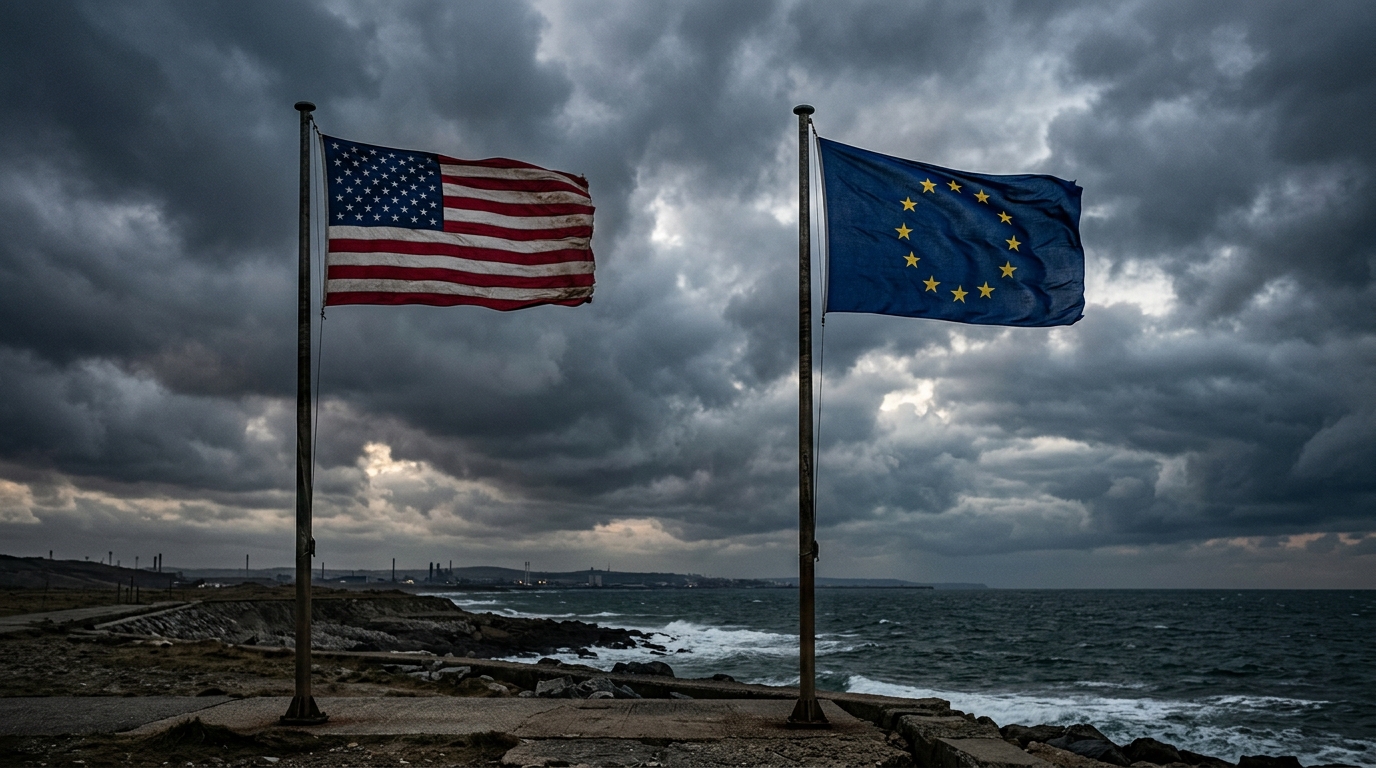
Brussels handed Google a billion-dollar bill this week. Within a day, President Trump handed the European Union a warning of his own: reverse it, or pay.
It is a strange fight to have feelings about, especially if you are a conservative who does not much care for Google. So let us sort out what actually happened, and why the principle underneath it is bigger than the company at the center of it.
What the EU did
Start with the fine, because it is the spark.
On Wednesday the European Commission fined Google's parent company, Alphabet, roughly 890 million euros, about a billion dollars, under a law called the Digital Markets Act. The penalty came in two pieces. One accused Google of favoring its own services, like its shopping, hotel, and flight tools, inside its search results. The other went after the way Google runs its Play app store, claiming it blocked developers from pointing users toward cheaper payment options.
Europe says these rules apply to every large tech gatekeeper equally and exist to keep competition fair across its 27 countries. That is their story, and they are sticking to it.
Trump's answer
Trump did not wait long, and he did not soften it.
In a post on Friday he announced an immediate trade investigation into the European Union under a law called Section 301, which lets a president hit back, tariffs included, when foreign rules unfairly burden American business. He accused Brussels of robbing American companies and, through them, the American taxpayer. He said the United States is not Europe's piggybank. And he predicted the fines would be reversed and a substantial tariff would land on the EU before long.
He was not only talking about Google either. He pointed to years of European fines against Apple, Meta, and Amazon, framing the whole pattern as Europe reaching into the pockets of American firms it did not build and cannot match.
The part conservatives should be honest about
Here is where it gets a little uncomfortable, so let us not dodge it.
Plenty of people reading this have no love for Google. The censorship complaints, the search manipulation, the sheer size of the thing. A lot of conservatives have real grievances with Big Tech, and watching Google get slapped with a fine might even feel satisfying. That reaction is fair, and it is honest.
But the fight Trump picked is not really about whether Google is a good company. It is about who gets to sit in judgment of American businesses and collect the check. His argument is that when a foreign bloc fines an American company a billion dollars, that money leaves American shores, and the precedent hands Brussels a permanent tollbooth on American success. You can dislike Google and still not want Europe running the meter on it. That is the distinction worth holding onto here.
The tool, and the catch
Now the honest complication, because there is one.
Section 301 has become Trump's favorite legal hammer this year, the same authority he just used to put tariffs on more than 80 countries. Part of the reason is that his earlier round of global tariffs got struck down by the Supreme Court, so his team reached for a different law to reach a similar goal. And that is exactly what critics are challenging. A legal group has already sued, arguing the administration is stretching Section 301 to quietly revive tariffs the courts already rejected. Even set the lawsuit aside, and a 301 probe can take months to play out, which makes the substantial tariff Trump promised a threat on a timer rather than a done deal.
In plain terms, this is a real move, but it is the opening of a fight, not the finish of one.
What to watch next
A few things will tell you whether this becomes leverage or just a loud Friday post.
Watch the timeline. If the administration moves fast on the probe, it is serious. If it drifts, it was mostly a message.
Watch Europe. Brussels signed a trade framework with Washington over the summer that plenty of European leaders already dislike. If this escalates, that fragile deal is the first thing that could crack.
Watch the courts. The legal challenge to using Section 301 this way could decide whether Trump even keeps the tool he is threatening to swing.
For now the message from the White House is blunt and familiar. American companies answer to America, and anyone treating them like an ATM is going to hear about it. Whether that message turns into an actual tariff is the next chapter.
Support Truth in Media
If you believe in our mission to bring honest, conservative news to the American people, please consider joining our newsletter.
Join The Movement