For the First Time in 92 Years, Americans Are Buying Silencers With No Registration
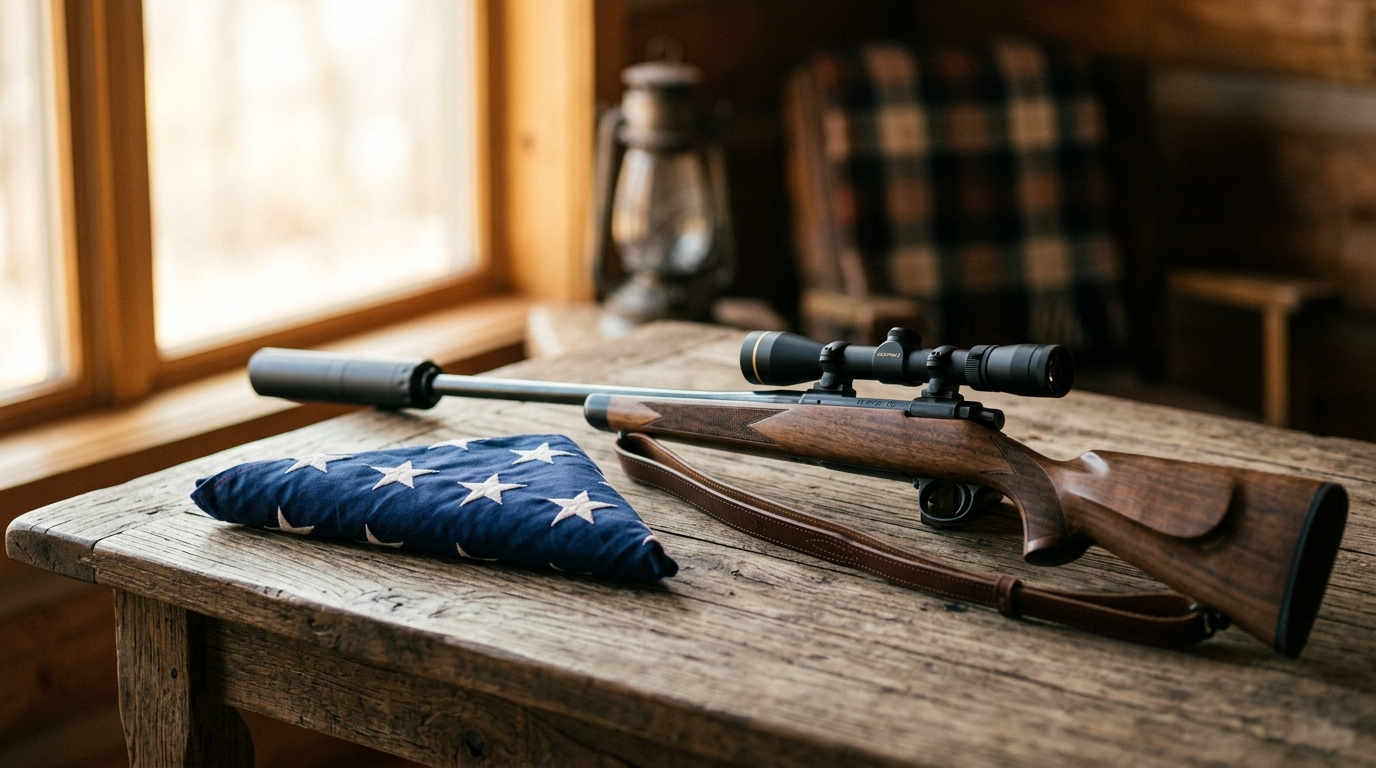
Last week, a gun owner walked out of a shop with a firearm suppressor and did something no American had legally done since 1934. He bought it with nothing more than the same background check you fill out for a hunting rifle. No 200 dollar tax stamp. No fingerprint cards. No six-month wait for the government's blessing.
That is a genuinely historic moment for gun rights. It is also widely misunderstood, and getting it wrong could land someone in real legal trouble. So let us do this carefully, the win and the fine print both.
What the judge actually ruled
Start with the decision, because the reasoning is not what most people assume.
On August 5, a federal judge in Texas, James Wesley Hendrix, struck down the registration and approval requirements of the National Firearms Act as they apply to suppressors, short-barreled rifles, and short-barreled shotguns. The NFA is the 1934 law that has forced anyone wanting a silencer or a short-barreled gun to register it, get fingerprinted, pay a 200 dollar tax, and wait months for federal approval.
Here is the clever part. The judge did not rule on the Second Amendment at all. He ruled on taxes. The NFA was built in 1934 on Congress's power to tax, and the Supreme Court blessed it back then on exactly that basis. The whole registration machine existed to collect that 200 dollar tax. But last year, in the One Big Beautiful Bill Act, Congress cut that tax to zero. The judge's logic was simple. A tax that collects nothing is not really a tax, and if there is no tax, the registration scheme built to enforce it loses the only constitutional leg it ever stood on.
In other words, Congress accidentally, or maybe not so accidentally, knocked the foundation out from under a 92-year-old law.
The part that makes it real: the DOJ walked away
This is where it gets bigger than one courtroom.
A district judge striking down a federal law usually triggers an immediate government appeal. Not this time. The judge gave the Justice Department a week to fight it. The deadline came and went, and the Trump administration did nothing. After nearly 50 Republican lawmakers urged Attorney General Todd Blanche to stand down, the DOJ confirmed it would not appeal. During his confirmation, Blanche had already signaled he would defer to Congress on whether to weaken the NFA rather than fight to save it.
Let that sink in. The federal government chose not to defend its own gun-registration scheme. That is a political decision as much as a legal one, and it tells you exactly where this administration stands.
Now the fine print, because this is where people get burned
Here is the part the viral posts leave out, and it matters more than the celebration.
This ruling is not a nationwide repeal of the NFA. It is not open season on suppressors for everyone. The injunction protects the specific people and groups who were parties to the lawsuits, which mainly means members of the gun-rights organizations that brought them, like Gun Owners of America and the NRA's Texas affiliate, along with 15 states and some individuals. If you are not covered, the old rules still apply to you, and treating your situation like the law changed everywhere is a fast way to catch a federal charge.
Even the groups that won are telling their own members to slow down and get it right. The NRA itself warned that the internet rumor mill is running overtime and that a lot of what is being passed around as fact is simply wrong. Suppressors are also still regulated under a separate federal law, so a background check at the counter is not going anywhere. And the fight is not over. The appeal window technically stays open into October, related cases are still moving through other courts, and at least one appeals court has already signaled in a separate case that it is skeptical of tearing down the NFA wholesale.
So this is a real breach in the wall, not the wall coming down.
Why it matters anyway
Do not let the caveats talk you out of the significance.
For decades, suppressors have been treated like the tools of criminals, when in reality they are hearing protection, closer to a muffler than a movie-villain gadget, and they almost never show up in actual crimes. Republicans have pushed for years to deregulate them through the Hearing Protection Act, treating a silencer like any other long-gun purchase. This ruling did through the courts what that bill could not get done through a filibuster, at least for the people it covers. And with the tax already zeroed out and the administration refusing to defend the old system, the momentum is clearly running one direction.
What to watch next
A few things will decide how far this goes.
Watch the October deadline. If the formal appeal window closes with no government challenge, the administration's decision to let this stand becomes permanent, not just political.
Watch the other cases. Gun groups are pushing similar suits elsewhere to widen who is covered. If those win, the circle of protected owners grows.
Watch for a nationwide fix. The cleanest ending is Congress finishing the job it started and pulling suppressors out of the NFA for everyone. With the tax already gone, that argument just got a lot easier to make.
For now, a 92-year-old law has its first real crack, and for the Americans covered by this ruling, buying a suppressor finally looks like buying any other gun. Just make sure you actually know which side of that line you are standing on before you hand over your money.
Support Truth in Media
If you believe in our mission to bring honest, conservative news to the American people, please consider joining our newsletter.
Join The Movement