Trump Dangles a Nuclear Deal to Land the Prize the Abraham Accords Never Got
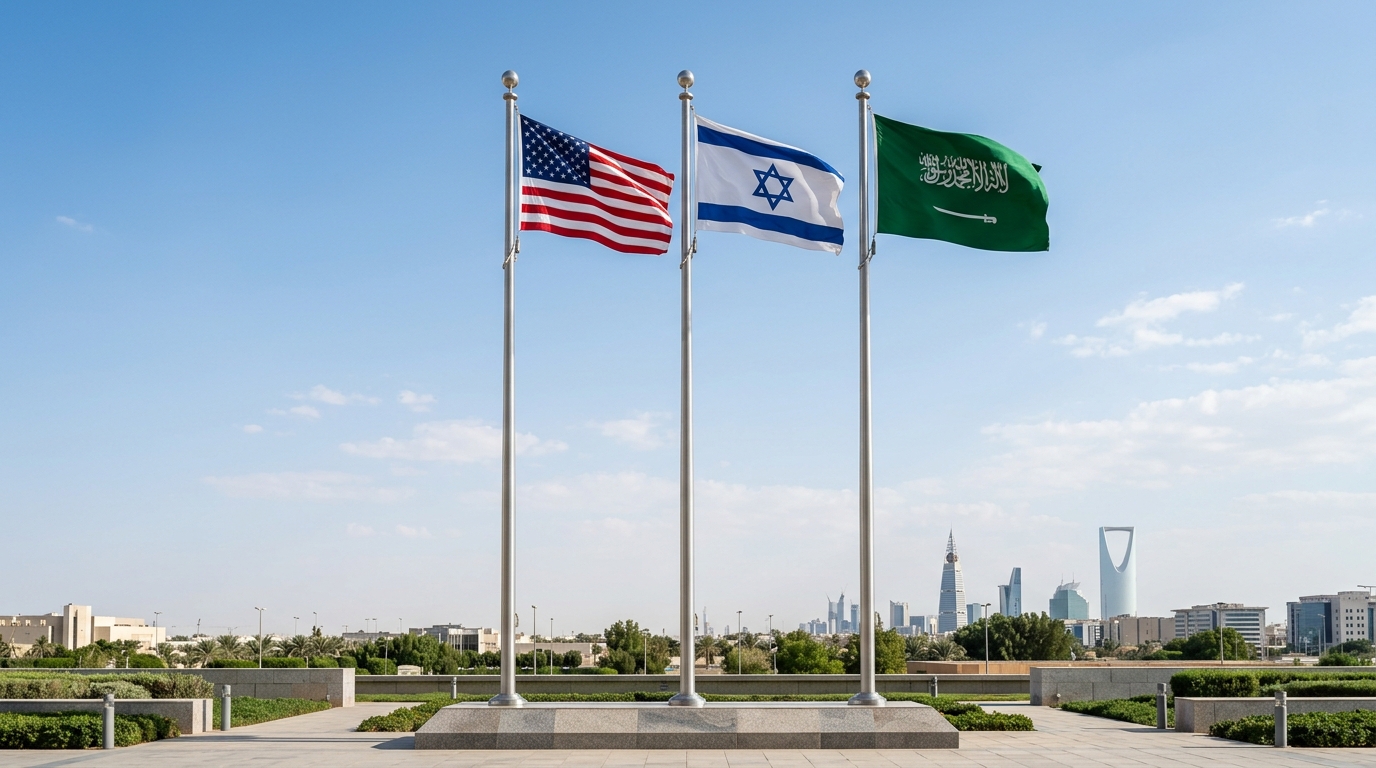
When Trump signed the Abraham Accords in 2020, one chair at the table stayed empty. The United Arab Emirates came. Bahrain came. Morocco and Sudan followed. But the biggest prize in the Arab world, Saudi Arabia, never signed. This week the president made his boldest move yet to change that, and he is using a nuclear deal to do it.
Here is what happened and why it matters, without the hype and without the hand-wringing.
The deal, and the condition that followed
On Wednesday the US Department of Energy signed a civilian nuclear cooperation agreement with Saudi Arabia. Energy Secretary Chris Wright and his Saudi counterpart put their names to what the department called a decades-long, multi-billion-dollar partnership. In plain terms, it opens the way for American firms like Westinghouse to build and fuel a Saudi nuclear power program, rather than the Saudis turning to Russia or China for the same thing.
Then, a day later, Trump added the twist. In a post online he said the deal is totally subject to Saudi Arabia joining the Abraham Accords and normalizing relations with Israel. He also said there would be no uranium enrichment, that this is strictly civilian, the same sort of program the UAE already runs.
That condition was not mentioned when the deal was announced. It is not even clear the Saudis knew it was coming. And that gap is the whole game right now.
Why this is such a big swing
Give the man his due on ambition here.
Normalizing Saudi Arabia with Israel would be the largest Middle East diplomatic prize in a generation. Saudi Arabia is the custodian of Islam's holiest sites and the anchor of the Arab world. If Riyadh recognizes Israel, the region's other holdouts suddenly have cover to follow. It would turn the Accords, Trump's signature first-term achievement, into something far larger than a handshake with a couple of small Gulf states.
The timing is not an accident either. Netanyahu's office all but said as much, casting the joint American and Israeli campaign against Iran as having cracked open a door to expand peace across the region. That is the White House argument in one line: break Iran's grip, and the Arab states that lived in fear of Tehran are freer to make peace with Israel.
There is a name worth remembering in all this. Senator Lindsey Graham, who died less than two weeks ago, spent his final months pushing for exactly this outcome, saying in a June interview that the goal was to bring Saudi Arabia into the Accords and end the Arab-Israeli conflict this year. He did not live to see it. This week the cause he championed took a real step forward.
The part we are not going to gloss over
Now the hard questions, because a serious reader deserves them.
Handing nuclear technology to Saudi Arabia makes a lot of people nervous, and not without cause. Trump says there will be no enrichment, but reporting suggests the agreement may leave room for a Saudi enrichment facility down the road, and that it skips the stricter international inspection regime that would let outsiders verify what is actually happening on the ground. Given that the Saudi crown prince has said before that if Iran ever built a bomb the kingdom would want one too, those terms matter. A lot.
There is also the small matter that Saudi Arabia has not agreed to any of this. Riyadh has insisted for years that it will not normalize with Israel without a genuine pathway to a Palestinian state, and Netanyahu has flatly rejected that idea. So the president has bolted his condition onto a partner that has not signed off on it, which means this could stall just as easily as it could succeed. Even some veteran negotiators worry the leverage got used backward, that Washington handed over the nuclear agreement before locking in the diplomatic commitment rather than the other way around.
None of that makes the goal wrong. It makes it hard. And hard is exactly where big things either get done or quietly fall apart.
What to watch next
Three things will tell you whether this becomes history or just a headline that fades by August.
Watch Riyadh. Saudi Arabia said nothing about the new condition. The moment that matters is if and how the kingdom answers, and whether the Palestinian-state demand is a real wall or an opening bid.
Watch Congress. The agreement heads to Capitol Hill for review, and the proliferation worries cut across both parties. Expect a real fight over the enrichment and inspection terms.
Watch the war. This entire opening exists because Iran is on its back foot. If the fighting shifts or drags on, the math for every player at the table shifts with it.
For now the empty chair is still empty. But for the first time in a long while, someone is pulling it out from the table. Whether Saudi Arabia sits down is the question that could define the next year in the Middle East.
Support Truth in Media
If you believe in our mission to bring honest, conservative news to the American people, please consider joining our newsletter.
Join The Movement