
The Supreme Court Closed One Door on Birthright Citizenship. Watch the One Kavanaugh Left Open.
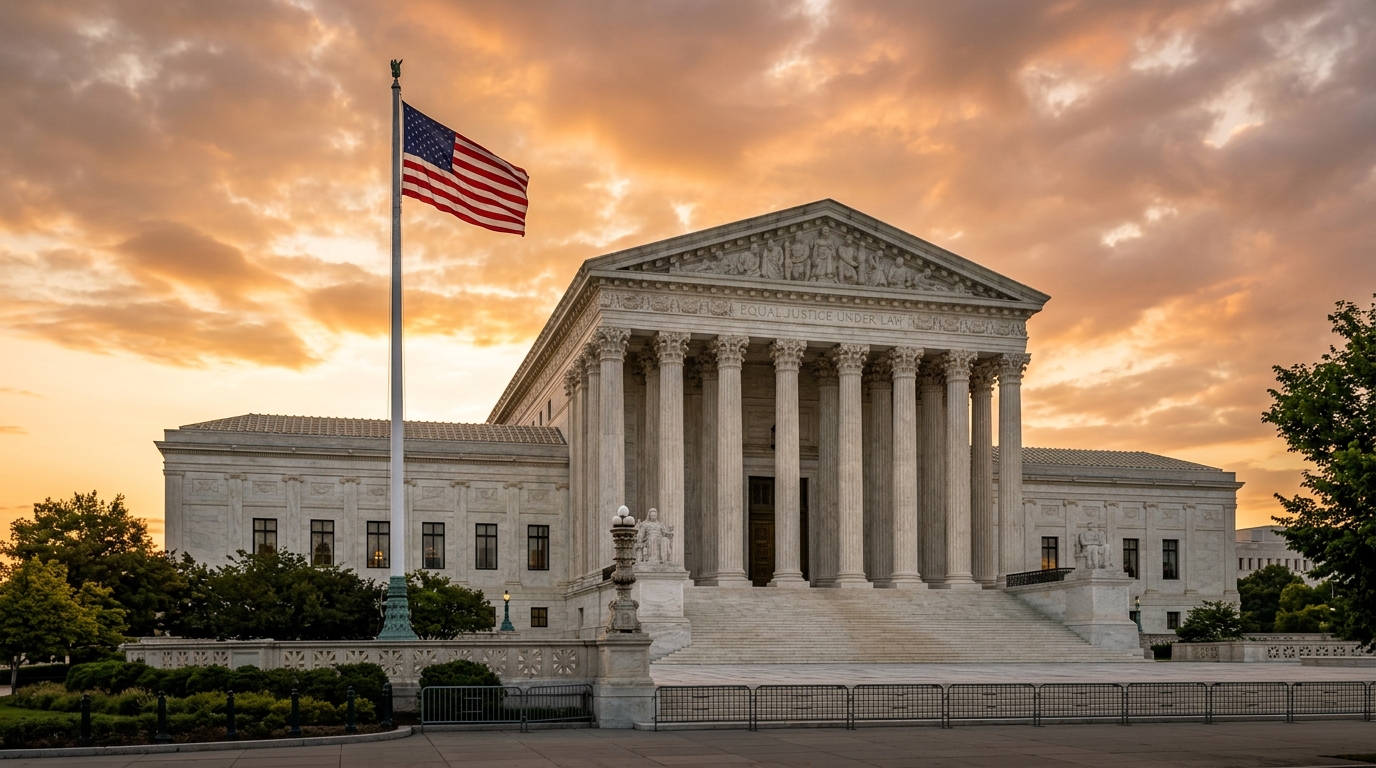
On June 30 the Supreme Court told President Trump he could not end birthright citizenship with the stroke of a pen. Eleven days later, a senator from Indiana filed a bill trying to do it anyway.
That gap, from a courtroom defeat to a fresh bill on Capitol Hill in under two weeks, is the real story. The fight did not end. It moved rooms.
What the Court actually decided, and what it did not
Start with the ruling itself, because the headlines flattened it.
The vote was 6 to 3 to throw out Trump's executive order. But only five justices said the order violated the 14th Amendment. Chief Justice Roberts, writing for the majority, walked through the history from English common law to the 1898 Wong Kim Ark case and concluded that children born here to parents who are unlawfully or temporarily present are citizens at birth.
The sixth vote is where it gets interesting. Justice Kavanaugh agreed the order was illegal, but not because it broke the Constitution. He said it broke a federal statute. Justice Thomas wrote a long dissent, joined by Gorsuch, arguing the majority got the history wrong, and Alito dissented as well.
So it was a loss for the administration. We are not going to dress it up as anything else, and neither did the president.
The door Kavanaugh left open
Here is the part most coverage skipped, and it is the whole ballgame.
Kavanaugh did not just split hairs about statute versus Constitution. He wrote that Congress could amend federal law to create exceptions to birthright citizenship for children born to foreign citizens who are here illegally or temporarily. He noted, almost as an aside, that Congress simply had not done it yet.
Trump read that concurrence and pivoted within hours. He posted that no long constitutional amendment is necessary and that Congress can handle it through legislation. That matters because amending the Constitution is close to impossible by design, while passing a statute needs only votes. Kavanaugh moved the target from a mountain to a hill.
The bill already testing the theory
You do not have to wonder whether anyone would take the hint. One already did.
Senator Jim Banks of Indiana introduced a bill that leans on an old wrinkle in Wong Kim Ark, the same case the majority relied on. That ruling listed categories of people whose children were not covered by birthright citizenship, including the children of a hostile occupying force. Banks wants to define illegal immigration as an invasion and place those children outside the guarantee.
Is that a real workaround or just the opening move in the next Supreme Court case? Honestly, nobody knows yet. But the strategy is clear: stop trying to go around Congress and start going through it.
Birthright citizenship was never absolutely universal
This is the fact that gets buried under all the shouting, and it is worth keeping in your back pocket.
Birthright citizenship has always had exceptions. The children of foreign diplomats born on American soil are not automatically citizens. For decades, many Native Americans were excluded because their tribes held a measure of separate sovereignty. Those carve-outs were never written into the amendment. They came from law and from interpreting that one phrase, subject to the jurisdiction thereof.
So the real question was never whether exceptions can exist. They already do. The question is whether Congress adds one more.
The other side has a case too, and it is fair to say it plainly. The majority and Wong Kim Ark read that clause to cover kids born here even to parents present unlawfully, and the government's own lawyer admitted at argument he had no hard numbers on how common birth tourism actually is. Reasonable people land in different spots on this. But the claim that the clause allows no exceptions at all does not survive contact with the history.
What to watch next
If you want to track this without getting lost, watch three things.
Watch the filibuster. Republicans hold the House, the Senate, and the White House, but a birthright bill needs 60 Senate votes under the current rule, and they do not have 60. A conservative columnist put the challenge bluntly this week: if Republicans cannot act now, the obstacle is not the Court and not the Democrats, it is their own attachment to a Senate rule that appears nowhere in the Constitution. So the thing to watch is whether leadership will touch that rule.
Watch the Banks bill's path. If it gets a committee hearing, this is a serious push. If it sits, it was a press release.
Watch for a rehearing request. Trump floated asking the Court to look at the issue again. Do not hold your breath. The same majority is still sitting, and courts rarely reverse themselves a few weeks later.
For now the guarantee stands and the first round went against the administration. The smarter read is that the ruling handed conservatives a map. Whether anyone follows it comes down to sixty votes in the Senate, and that is the fight actually worth watching.
Support Truth in Media
If you believe in our mission to bring honest, conservative news to the American people, please consider joining our newsletter.
Join The Movement